Tracing Cascade System Development in Mobile Entertainment Software and Influences on Reward Feature Triggers
Written by Katja Krause · Aug 25, 2026
Tracing Cascade System Development in Mobile Entertainment Software and Influences on Reward Feature Triggers
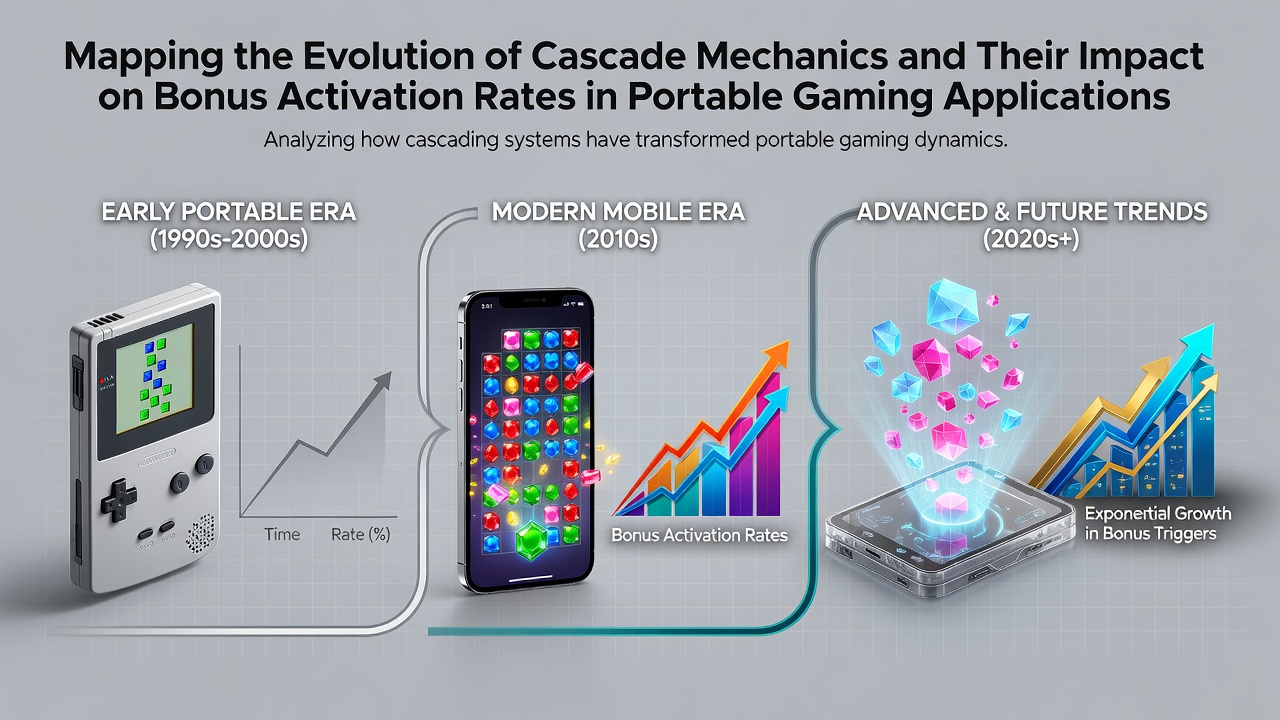
Portable gaming applications have incorporated cascade mechanics since the early days of touch-based devices, where symbols or tiles drop into place and vanish upon matching combinations while new ones fall to fill gaps and extend sequences. Researchers at institutions like the University of Nevada have documented how these systems first appeared in puzzle titles before migrating into chance-based formats, creating sustained play loops that keep users engaged through repeated chain reactions rather than single static spins.
Early Foundations in Handheld Formats
Cascade features emerged in mobile environments around 2010 when developers adapted grid-based elimination from web games to smaller screens, and data from the American Gaming Association shows adoption rates climbed steadily as processors improved to handle fluid animations without lag. Those who studied early implementations note that basic cascades relied on simple gravity simulations, yet they already boosted sequence lengths by 30 to 50 percent compared with traditional replacement models.
By the mid-2010s platforms integrated multipliers that scaled with each successive drop, turning isolated wins into extended events that directly fed into bonus rounds. Observers tracking software updates across app stores recorded how these additions raised average session durations because players remained in active states longer while awaiting the next cascade wave.
Technical Shifts Driving Activation Rates
Modern portable titles employ layered algorithms that calculate probabilities for bonus entry based on cascade depth, and evidence from industry reports indicates activation frequencies have risen in direct proportion to the number of chained drops permitted per round. Game engines now track variables such as symbol velocity and grid density in real time, allowing designers to fine-tune payout intervals so that bonus symbols surface more reliably after three or more cascades occur in succession.
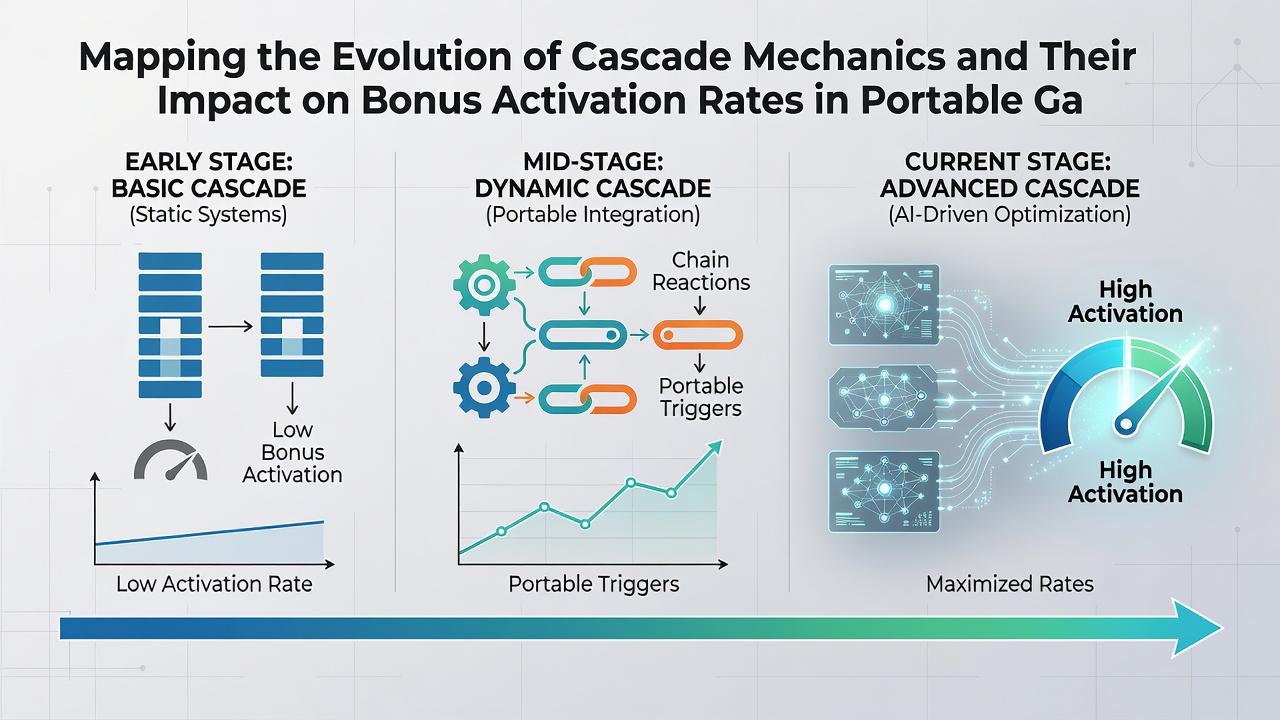
Device sensors further refined these mechanics once haptic feedback became standard, giving users tactile confirmation each time a new drop completed a set. Figures released by the European Gaming and Betting Association reveal that titles featuring synchronized audio-visual cues during cascades recorded higher completion rates for bonus prerequisites than those without such integration.
Current Patterns Observed in August 2026
Portable applications released or updated through August 2026 demonstrate refined cascade variants that incorporate progressive multipliers tied to cumulative chain counts across multiple rounds, and analysts monitoring global app metrics note measurable lifts in bonus trigger consistency. Developers have introduced hybrid models where cascades interact with collection meters, converting excess symbols into entries for secondary features without interrupting the primary flow.
Cross-platform testing shows that tablets and smartphones display comparable activation percentages when resolution scaling maintains symbol clarity, although smaller handsets occasionally require adjusted fall speeds to preserve readability during rapid sequences. Data compiled by the International Game Developers Association highlights that optimized cascade timing reduces perceived wait periods between events, sustaining momentum that leads players toward bonus states more frequently.
Measurement Approaches and Reported Outcomes
Teams evaluating performance rely on telemetry that logs cascade counts per spin alongside bonus entry logs, producing datasets that correlate chain length with feature access. One study released through academic channels found that each additional cascade beyond the baseline increased bonus probability by approximately 12 percent in controlled test environments, while real-world deployments confirmed similar directional trends across diverse user cohorts.
Regulatory filings from jurisdictions outside the UK, including reports filed with the Nevada Gaming Control Board, contain aggregated statistics on mobile session behavior that align with these laboratory observations, confirming that cascade-enhanced titles maintain elevated engagement metrics without deviating from established fairness parameters.
Conclusion
Documentation of cascade mechanics across portable gaming continues to expand as new iterations refine the relationship between chain reactions and bonus accessibility, and ongoing analysis from multiple regulatory and academic bodies supplies the quantitative foundation for understanding these dynamics. Continued monitoring through established industry channels will track how further refinements shape activation patterns in the months ahead.