Math Models Driving BGaming Progressive Jackpots for UK Mobile Players
Written by Otto Wolf · Aug 2, 2026

Math Models Driving BGaming Progressive Jackpots for UK Mobile Players
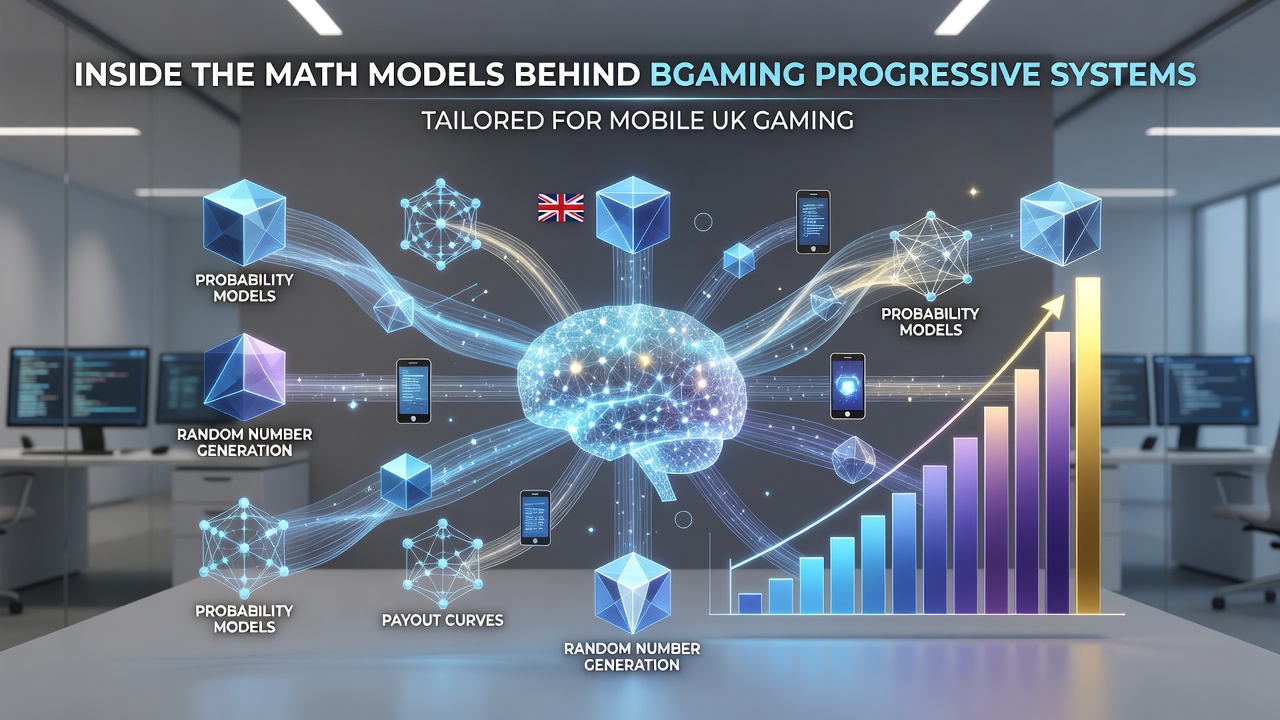
Progressive jackpot systems from BGaming rely on interconnected mathematical frameworks that calculate real-time contribution rates, seed values, and payout probabilities across multiple mobile sessions. These models integrate random number generators with weighted algorithms that adjust dynamically based on player volume and stake distribution while maintaining consistent return-to-player percentages on UK devices. Observers note that the core engine uses a multi-tiered pooling mechanism where each spin allocates a fixed percentage to the jackpot pool, creating exponential growth curves that accelerate during peak evening hours in August 2026.
Probability Layers and Pool Dynamics
Researchers have examined how BGaming structures its progressive tiers through distinct probability bands that separate minor, major, and grand jackpots. Each band operates on independent yet linked formulas where the trigger probability for the grand tier often sits between 1 in 5 million and 1 in 20 million spins depending on the game title. The system recalibrates contribution rates every few milliseconds on mobile connections to balance network latency with pool integrity, ensuring that simultaneous plays from different UK regions feed into a unified ledger without synchronization errors.
Mobile Optimization in the Algorithms
Engineers tailor these models for mobile environments by incorporating data-compression techniques and edge-computing adjustments that reduce computational load on handsets while preserving the integrity of the underlying random sequences. Studies from the University of Nevada, Las Vegas indicate that such adaptations allow progressive systems to maintain sub-100-millisecond response times even under variable 4G and 5G conditions common across Britain. The algorithms further embed session-state caching that resumes interrupted spins without resetting jackpot eligibility, a feature particularly relevant for commuters who switch between Wi-Fi and cellular networks mid-session.
Contribution Rate Calculations
Contribution rates typically range from 1 percent to 5 percent of each wager and feed into the progressive pool according to a geometric distribution that favors longer play sessions. BGaming documentation shows these rates scale with game volatility, so higher-volatility titles allocate larger slices to the jackpot while lower-volatility ones prioritize base-game returns. Data published by the Nevada Gaming Control Board reveals similar scaling patterns in comparable systems, confirming that the mathematical relationship between stake size and pool growth remains linear across jurisdictions.
Integration with UK Regulatory Requirements
Although the UK market imposes specific technical standards, BGaming aligns its progressive engines with broader European technical requirements documented by the European Gaming and Betting Association. The models incorporate audit trails that log every pool increment and decrement, allowing third-party testing houses to verify fairness without exposing proprietary coefficients. These logs also support cross-border reconciliation when UK players compete in the same progressive network as users from other regulated territories.
Case Examples of Model Application
One documented implementation involves a BGaming title where the progressive seed starts at £50,000 and grows through incremental additions calculated via an exponential smoothing formula. Players on mobile devices trigger the jackpot when a random value falls within a narrowing acceptance window that shrinks as the pool increases, a mechanism that keeps expected payout intervals relatively stable despite rising prize values. Another example uses a hybrid fixed-plus-progressive structure where 80 percent of the pool remains reserved for the grand tier while the remaining 20 percent cycles through minor awards, reducing variance spikes that could otherwise discourage mobile engagement.
Future Adjustments Anticipated in 2026
Industry reports from August 2026 highlight ongoing refinements to these math models, including the introduction of machine-learning overlays that predict pool depletion rates based on historical mobile traffic patterns. These predictive layers allow operators to adjust contribution percentages preemptively, preventing both excessive jackpot droughts and unsustainable payout clusters. Such developments build on existing frameworks without altering the fundamental probability architecture that underpins regulatory compliance.
Conclusion
BGaming progressive systems demonstrate how layered mathematical models can sustain large-scale jackpot mechanics across mobile networks while meeting technical and regulatory demands in the UK market. The combination of real-time contribution algorithms, tiered probability structures, and mobile-specific optimizations creates a framework that scales efficiently with player volume and device variability. Continued evolution of these systems, supported by data from diverse regulatory environments, ensures their ongoing adaptation to changing network conditions and player behaviors.