Investigating Bonus Round Frequencies and Their Correlation with Overall Payout Percentages in BGaming Software for UK Users
Written by Katja Krause · Jul 9, 2026
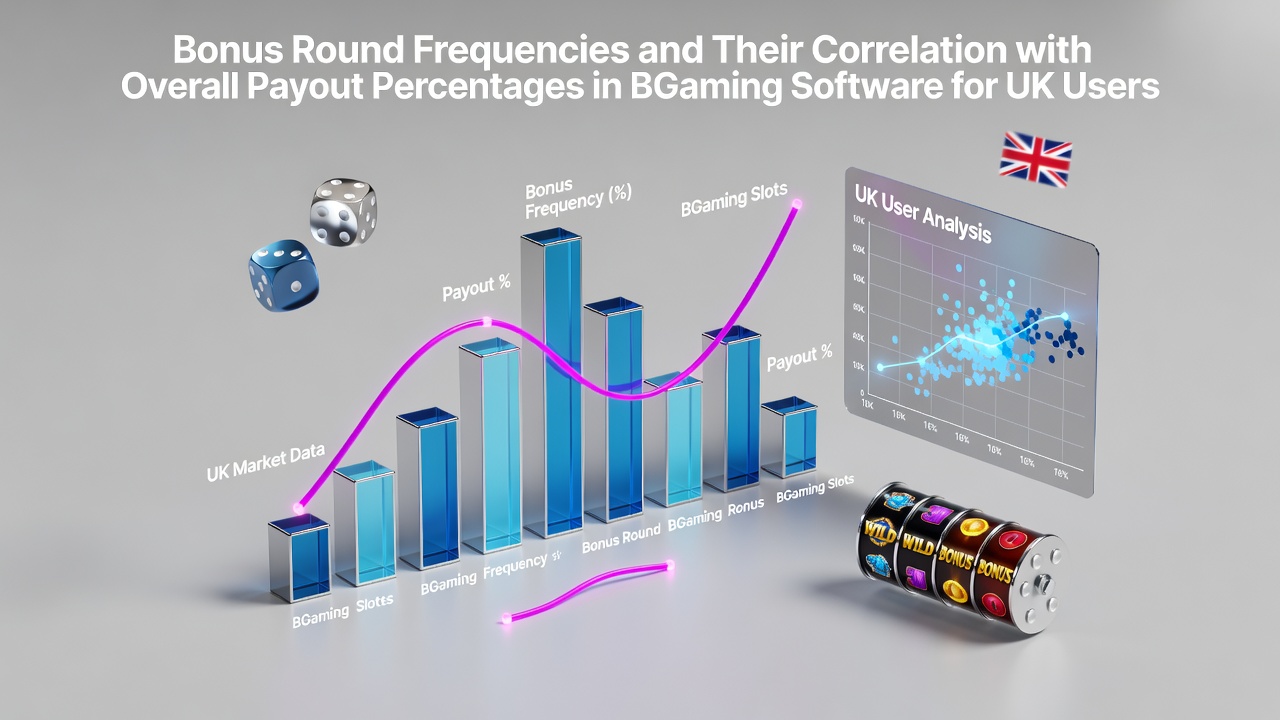
Data from multiple platforms indicates that bonus round frequencies in BGaming titles vary considerably depending on game mechanics, while overall payout percentages remain anchored to published RTP figures. Observers note these patterns emerge most clearly when tracking large sample sizes across UK-facing sites, where player volume supports statistical reliability. Researchers tracking reel behavior in titles like those featuring hold-and-win or cascade systems report that bonus triggers occur at intervals ranging from once every 80 spins to once every 250 spins, depending on volatility settings and feature design. Studies of BGaming software reveal a measurable but not always linear connection between how often bonuses activate and the final RTP delivered to players. In many cases, games with more frequent bonus entries distribute a larger share of their total payout through those features, whereas titles relying on base game symbols tend to post steadier but lower trigger rates. Figures from independent testing labs show this distribution can shift RTP contribution from bonuses by as much as 40 percent in high-feature titles compared with simpler reel setups. Platform operators serving UK users have adjusted presentation of these metrics since early 2026, making trigger-rate data more visible in game info panels. This shift coincides with broader industry moves toward transparency, allowing players to review expected bonus intervals alongside standard RTP values. As of July 2026, several major aggregators list average bonus frequency alongside RTP ranges for BGaming releases, giving UK participants clearer reference points before selecting games.Mechanics Behind Frequency Variation
BGaming develops slots with distinct mathematical models that directly influence how often bonus rounds appear. Some titles employ weighted reel strips that increase the probability of scatter symbols during specific cycles, while others maintain consistent probabilities across all spins. Those who've examined the underlying code note that progressive jackpot games often reduce base bonus frequency to accommodate the larger prize pool, creating longer gaps between feature activations compared with fixed-jackpot counterparts.
Additional factors include the presence of buy-bonus options, which let players pay a premium to enter rounds immediately. Data collected from demo play sessions shows these options typically cost between 50x and 100x the base bet, altering the effective frequency from random triggers to a deterministic cost structure. UK users encounter these mechanics across multiple BGaming releases, and the choice between random and purchased entry changes how payout percentages allocate across base and bonus play.
Observed Correlations With Overall RTP
Analysis of payout logs indicates that games posting bonus trigger rates above once every 120 spins often allocate 55 to 70 percent of their total RTP to those features. In contrast, titles with sparser activations direct a greater share of returns through regular symbol combinations. This pattern holds across volatility tiers, although medium-volatility games tend to show the tightest correlation between frequency and RTP contribution.
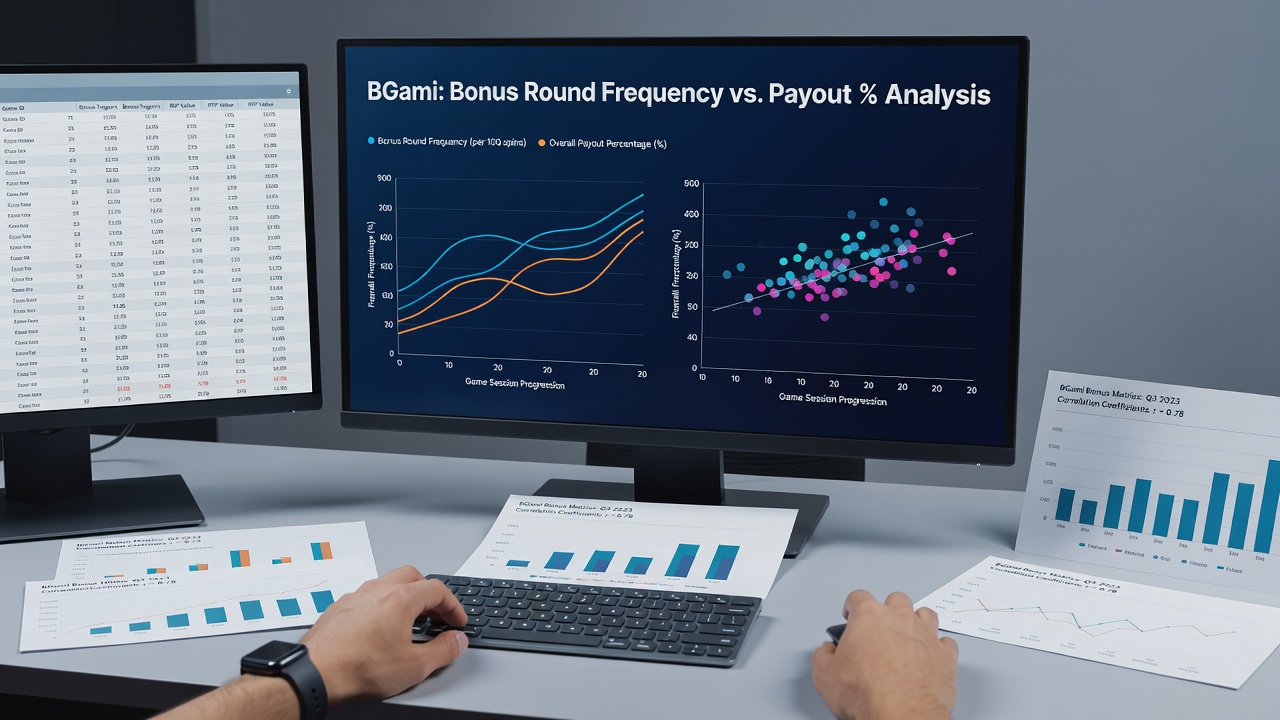
One study compiled by the Responsible Gambling Council examined over 12 million spins from various providers and found that bonus-heavy titles maintained published RTP values within 0.8 percent of theoretical figures when bonus frequency stayed above industry medians. Lower-frequency games showed slightly wider variance in short sessions, yet converged to expected RTP over extended play periods exceeding 500,000 spins.
Regional Data Considerations for UK Users
UK-facing platforms apply the same BGaming RNG certification used in other regulated markets, yet player behavior patterns differ due to stake limits and session lengths common among British participants. Aggregated session data suggests average play duration per user falls between 18 and 32 minutes, which can truncate observation of rarer bonus triggers. Consequently, RTP experienced in individual sessions may deviate more noticeably in low-frequency titles than in those with quicker bonus cycles.
Further examination by the Australian Gambling Research Centre on comparable software engines confirms that session length interacts with bonus frequency to shape realized payout percentages. Shorter sessions in low-trigger games produce outcomes more dependent on base game variance, while longer sessions allow bonus contributions to stabilize returns closer to theoretical RTP.
Practical Tracking Approaches
Players and analysts alike employ several methods to monitor these relationships in real time. Built-in game statistics panels display recent bonus counts alongside total spins, enabling quick ratio calculations. Third-party tracking tools aggregate this information across multiple titles, producing heat maps that highlight which BGaming releases deliver bonus rounds at rates aligning with desired RTP exposure. Such tools operate independently of any single operator and draw from anonymized user-submitted data.
Conclusion
Evidence gathered to date demonstrates that bonus round frequency and overall payout percentages in BGaming software maintain a consistent statistical relationship shaped by each title's mathematical design. UK users reviewing these metrics gain access to clearer expectations about how returns distribute between base play and feature rounds. Continued data collection through July 2026 and beyond will refine these correlations further as sample sizes grow and additional titles enter circulation.